

Electronics and precision hardware impose a set of requirements that general metal finishing does not: cleanliness is measured rather than judged, residues that are acceptable elsewhere are disqualifying here, and the surface often has to be electrically conductive or thermally stable as well as corrosion resistant. This article covers the three requirements that cause the most difficulty in practice — cleanliness control, silicone-free finishing, and salt spray performance on small precision parts.
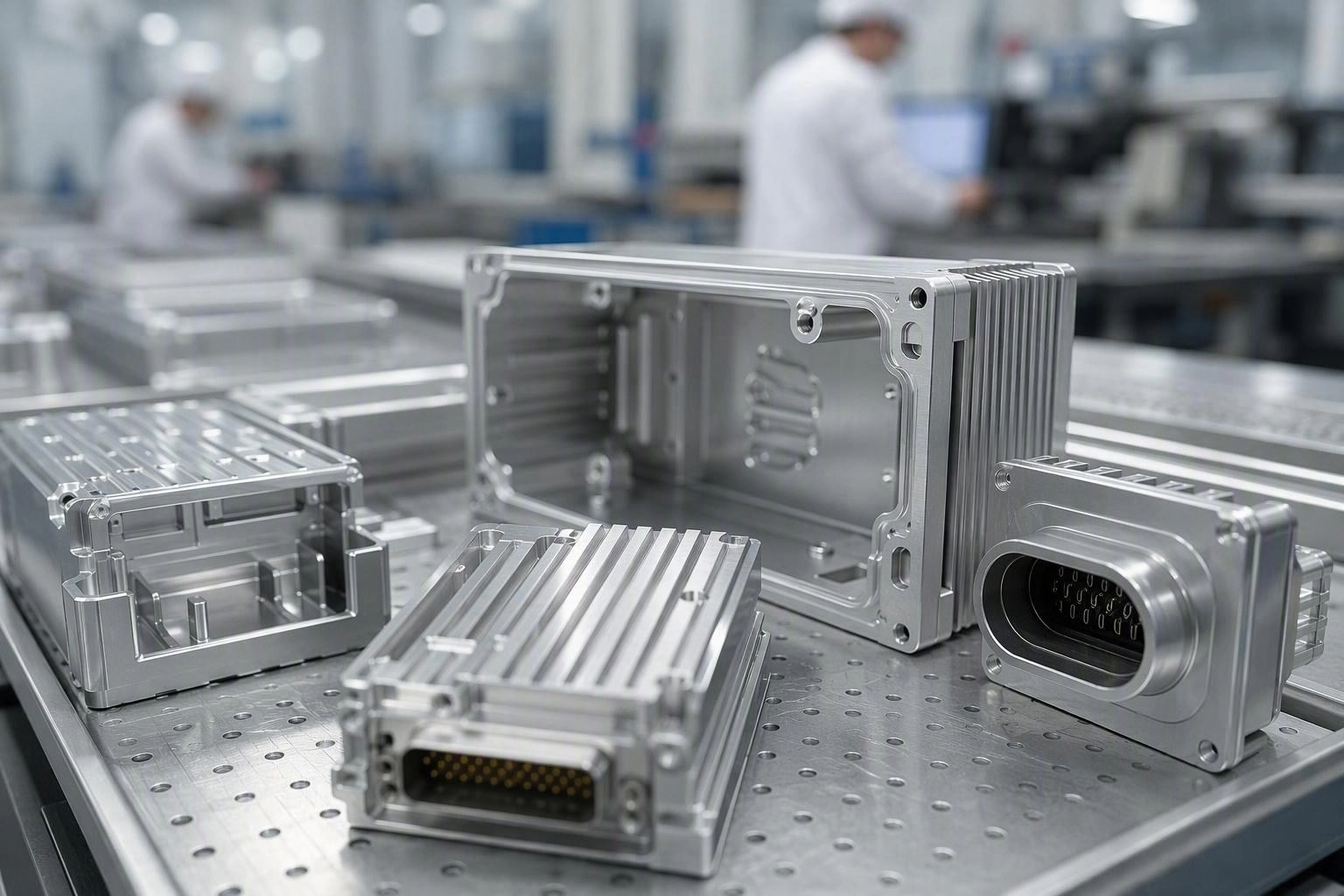
Why electronics parts are different
| Requirement | Typical electronics / precision hardware | Typical general metal finishing |
|---|---|---|
| Cleanliness | Measured: ionic contamination, particulate count, NVR | Assessed by water-break and visual inspection |
| Residue tolerance | Very low; residues affect conductivity and bonding | Moderate |
| Silicone | Usually prohibited — contaminates bonding and coating processes | Frequently acceptable |
| Dimensional tolerance | Tight; material removal must be minimal and predictable | Broader |
| Surface conductivity | Often required to be preserved | Rarely relevant |
| Part size | Small, high count, difficult to handle and inspect | Larger, individually handled |
| Downstream processes | Adhesive bonding, wire bonding, thermal interface, soldering | Painting, powder coating |
Cleanliness: from visual judgement to measurement
The first change a general metal finisher encounters in electronics work is that "clean" becomes a number. The standard measures are:
- Ionic contamination — typically measured by resistivity of solvent extract (ROSE) testing or ion chromatography, reported in µg NaCl equivalent per cm². This detects invisible salt and flux residues that cause leakage currents and corrosion.
- Non-volatile residue (NVR) — the mass of material left after solvent evaporation, indicating organic film contamination that interferes with bonding and coating adhesion.
- Particulate cleanliness — particle counts above specified sizes, critical for optical, semiconductor, and precision assembly applications.
Achieving these standards requires more than a stronger cleaner. It requires control of what enters the final rinse and how the part is handled afterwards.
Practical measures:
- Use deionised or RO water for the final rinse. This is essentially mandatory, not optional. Tap water alone introduces the ionic load the test then measures.
- Control the pre-clean chemistry. A neutral cleaner such as LG201 Neutral Cleaner removes light oils and shop soil from sensitive substrates without leaving the strongly alkaline or acid residues that standard industrial cleaners deposit, and without attacking the substrate.
- Prevent post-rinse contamination. Gloves, clean racking, clean packaging. A part can pass every process stage and fail the ionic test because it was handled with bare hands or stored in contaminated packaging.
- Verify with the actual acceptance test. Do not infer ionic cleanliness from a water-break test. The two measure different things.
Silicone-free finishing: why it matters and where the risk hides
Silicone contamination is a persistent problem in electronics manufacturing because of how it behaves. Silicones have very low surface energy, so they spread readily across a surface and migrate. Once present in a facility, they are extraordinarily difficult to eliminate — they can transfer from a lubricant, a release agent, a mould release, a hand cream, or a cleaning product.
The consequences are specific: adhesive bonding fails at the bond line, conformal coating crawls and dewets, wire bonding fails, and thermal interface performance degrades.
Where the risk actually comes from:
| Source | Risk | Control |
|---|---|---|
| Silicone-based defoamers in cleaning products | Deposits silicone directly on every part | Specify silicone-free chemistry explicitly |
| Mould release agents (especially on die-cast parts) | Transfers to the part and to racking | Use silicone-free release agents; clean racking after cast part runs |
| Lubricants and greases in the plant | Airborne and contact transfer | Segregate lubricant types; avoid silicone greases near finishing areas |
| Hand creams and personal care products | Transferred by operators handling parts | Glove policy; awareness training |
| Incoming parts from suppliers | Unknown contamination entering the line | Specify incoming cleanliness; test suspect batches |
The most important control is the first one: when specifying a cleaning chemistry for electronics work, state that silicone-free is a requirement. Most general-purpose industrial cleaners do not declare their defoamer chemistry, and a product that performs well in a general metal shop may be entirely unsuitable for an electronics line. Silicone-free cleaning chemistry such as LG201 Neutral Cleaner, which operates at neutral pH and relies on surfactant and chelating action rather than aggressive reactions, is formulated for this constraint.

Preserving dimensional accuracy
Precision parts frequently carry tolerances tight enough that material removal during cleaning is a genuine concern. Strong alkaline cleaners will etch aluminium; strong acids will attack most metals. On a part with a ±5 µm tolerance on a critical dimension, an aggressive cleaning stage is a process risk, not just a quality risk.
The appropriate chemistry for these parts works through surfactant and chelant action rather than reaction with the substrate. Options include:
- Neutral cleaning for general soil removal on sensitive substrates and tight-tolerance parts — no substrate attack, dimensions preserved.
- Neutral rust removal where light oxidation must be removed without the etching associated with strong acid baths. LG202 Neutral Rust Remover removes light rust and oxidation while leaving dimensional accuracy and surface finish intact, which makes it suitable for machined components and precision hardware where a conventional acid derust would be unacceptable.
- Post-treatment sealing or protection that deposits a thin, uniform film without measurable dimensional change. LG909 Ceramicizing Agent produces a hard, thin film appropriate for surfaces that will be handled or abraded, while LG912 Neutral Sealant builds a protective layer from a near-neutral bath — relevant where an acidic post-treatment would be inappropriate for the substrate or the assembly.
Salt spray performance on small parts
Small precision parts present a salt spray challenge that larger parts do not: edge-to-volume ratio is high, so edges and corners — where coating is thinnest and corrosion starts first — represent a larger proportion of the total surface.
Practical measures that improve results:
- Ensure uniform coverage during bulk or barrel processing. Contact points between parts are unprotected. Reduce barrel load, extend processing time, or use a jig for critical parts.
- Do not over-etch in the cleaning stage. Over-etched surfaces have increased surface area and more active sites, which accelerates corrosion initiation.
- Verify the conversion or passivation layer forms evenly. On small parts, an incomplete layer is harder to detect visually and shows up only in the salt spray result.
- Control the final rinse. Dried salts from rinse water are a direct corrosion initiator on small parts where the surface-to-volume ratio amplifies their effect.
- Handle and package cleanly. Fingerprints on small parts are a realistic corrosion source; glove handling is not optional.
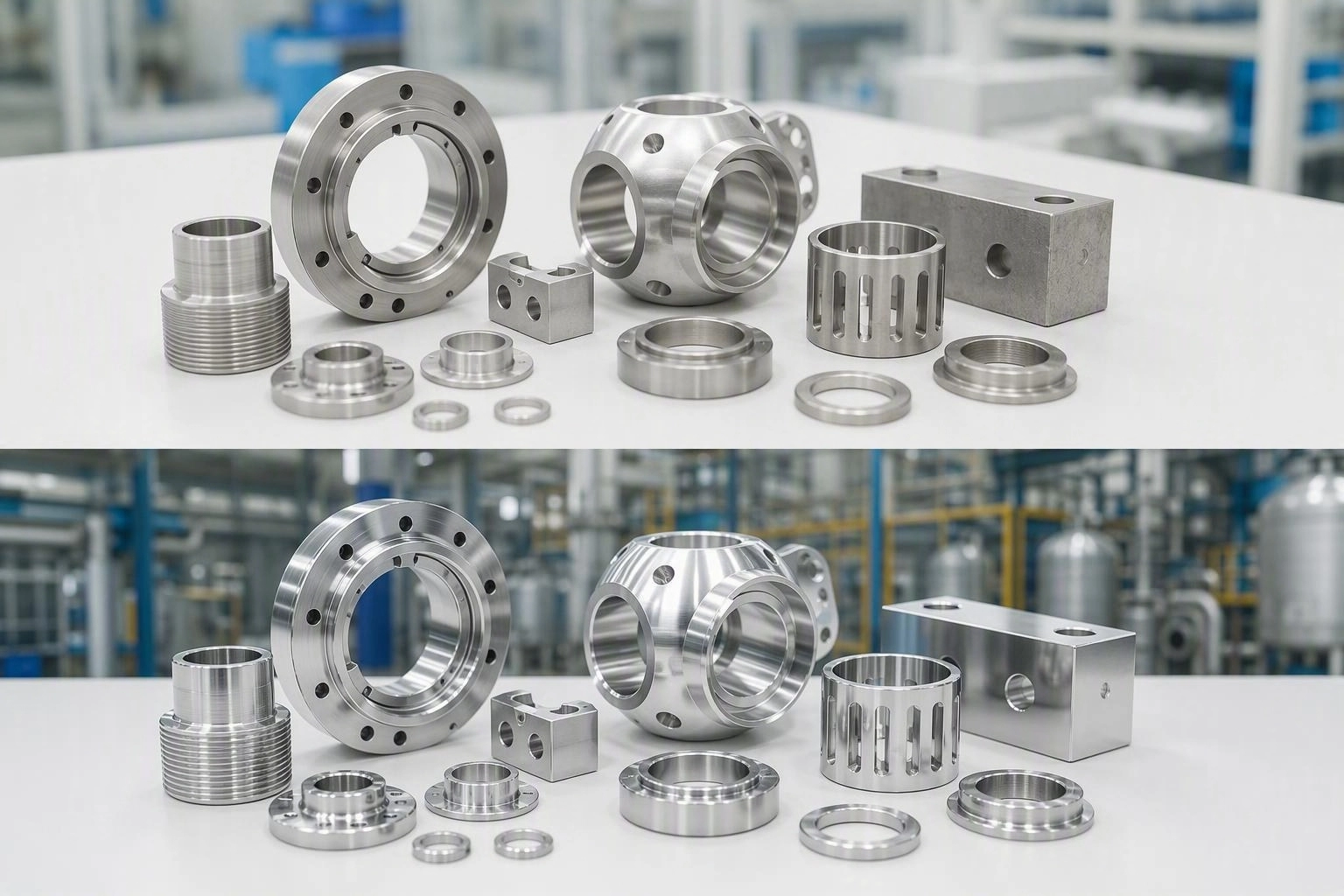
Selecting chemistry for an electronics or precision line
| Requirement | Suitable chemistry characteristics |
|---|---|
| Ionic cleanliness | Low-residue formulation; DI final rinse; neutral pH preferred |
| Silicone-free | Explicitly declared silicone-free defoamer system |
| Dimensional accuracy | Non-etching; surfactant and chelant based rather than reactive |
| Conductivity preserved | Avoid film-forming treatments on conductive surfaces; clean and passivate rather than coat |
| Appearance uniformity | Controlled film thickness; hard film for handling and wear resistance |
| Salt spray | Even coverage at edges; complete conversion layer; clean final rinse |
Next step
Foshan Changcheng Surface Technology supplies cleaning, rust removal, ceramicizing, and sealing chemistry for electronics and precision hardware applications, including LG201 Neutral Cleaner, LG202 Neutral Rust Remover, LG909 Ceramicizing Agent, and LG912 Neutral Sealant.
Send us your substrate, part tolerance, contamination type, downstream process (bonding, coating, soldering, or thermal interface), and cleanliness specification. We will recommend a product set and confirm silicone-free status, then supply samples for trial on your own parts. Technical datasheets, ISO / MSDS / RoHS documentation, and electronic catalogues are available on request.


