

Building materials are a different proposition from other metal finishing sectors in one important respect: the parts are large, visible, and expected to last for decades outdoors. A defect that would be invisible on a machined component inside an enclosure is a visible failure on an architectural façade. At the same time, the volumes are high and the cost pressure is intense, which leaves limited room for extra process stages.
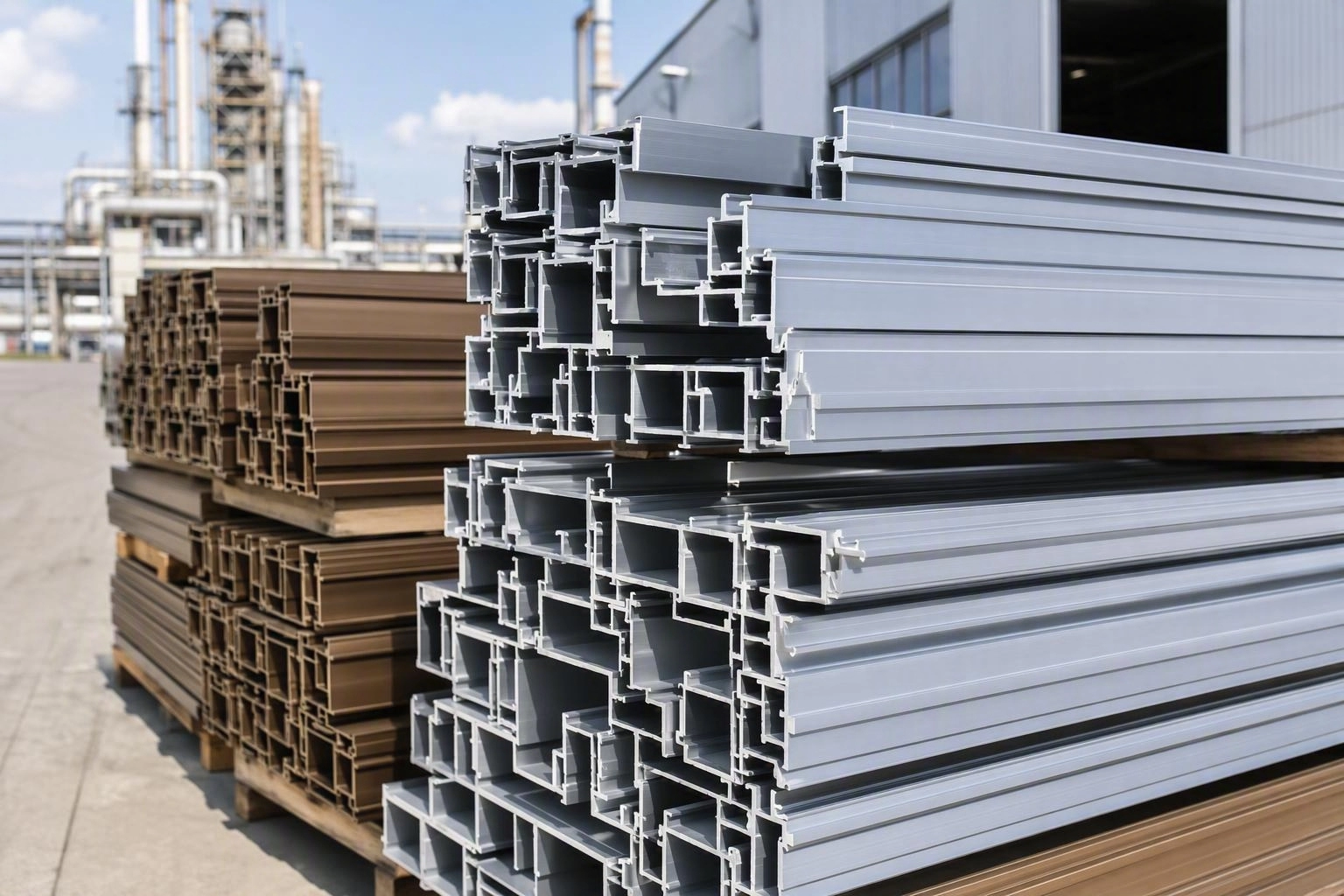
The material groups and their treatment needs
| Material | Typical products | Treatment priority |
|---|---|---|
| Extruded aluminium | Window and curtain wall profiles, handrails, cladding | Even etching and anodising quality; brightening; consistent colour |
| Galvanised steel | Structural beams, roofing, ductwork | Passivation of the zinc surface; paint adhesion; white rust prevention |
| Stainless steel | Handrails, cladding, fixings, architectural hardware | Passivation after fabrication and welding; contamination removal |
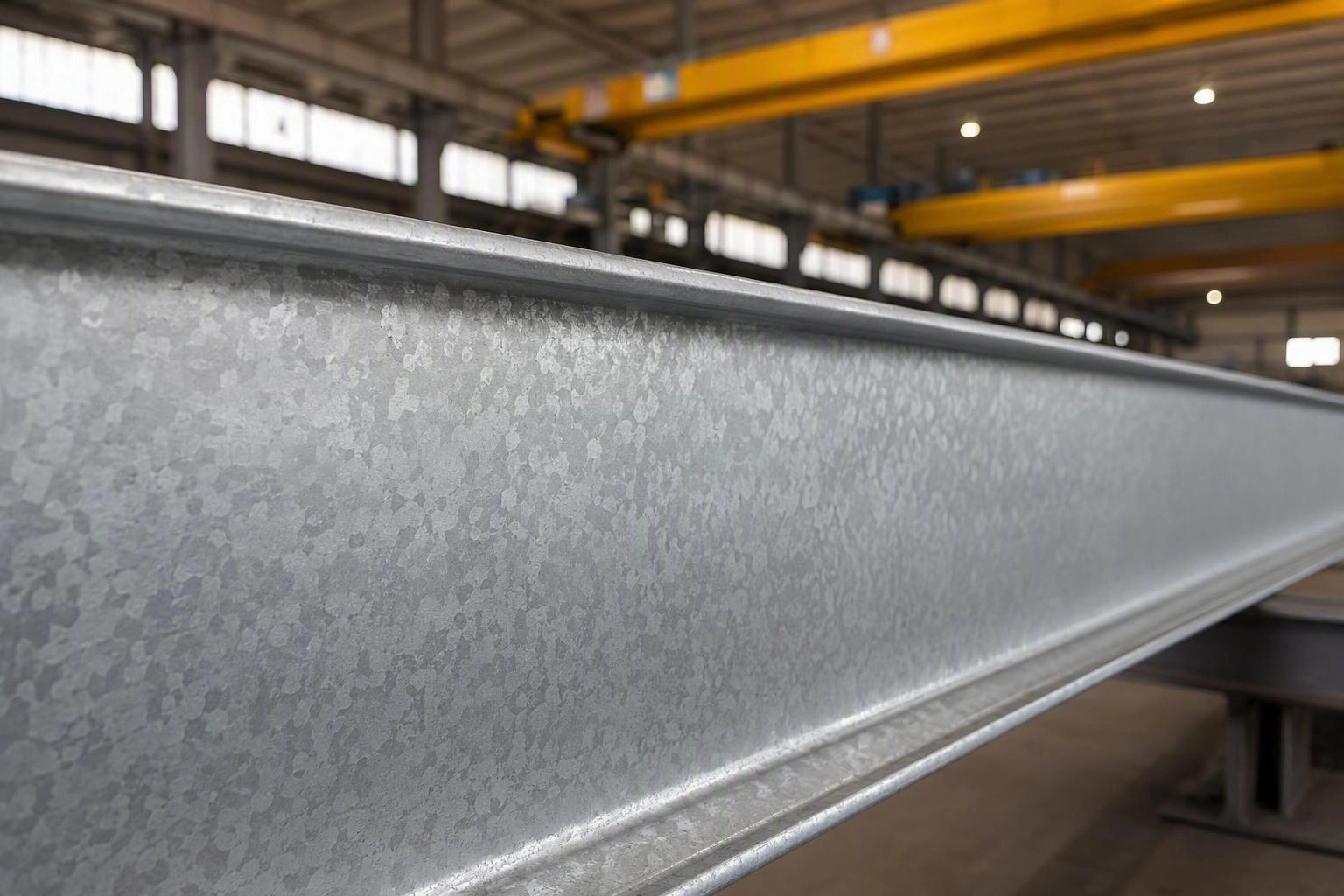
| Aluminium hardware | Door handles, hinges, window fittings | Surface consistency; sealing; fingerprint resistance |
| Cast aluminium | Decorative castings, brackets | Smut removal; surface preparation for coating |
Aluminium profiles: the etching and brightening balance
Extruded aluminium arrives from the extrusion press with a surface that must be chemically conditioned before anodising, painting, or sealing. The conditioning stage determines the final appearance more than any subsequent step, because it is what creates the surface the rest of the process builds on.
The core requirement is uniform removal. Extrusion produces a surface with differential cooling rates, die lines, and in some alloys visible banding or streaking. The chemical conditioning stage must remove a consistent depth of material across the entire profile, including the corners and the areas near the die contact.
Two common failure modes:
- Etch banding. Non-uniform removal leaves visible light and dark bands, especially on anodised profiles viewed at an angle. The cause is usually uneven temperature, uneven concentration, poor agitation, or profiles stacked in a way that restricts solution access.
- Loss of brightness. Over-aggressive etching produces a uniform but dull, satin-white surface where a bright finish was specified. This is a specification error more than a process error — the required finish dictates the etch amount, and bright finishes require much less material removal.
On the aluminium cleaning side, LG808 Aluminum Spray Acidic Degreasing Agent addresses oil removal on aluminium without the etching risk that un-inhibited alkaline chemistry introduces, and it works on the mixed oil-and-oxide conditions typical of extruded profiles. LG809 illuminant supports the brightening requirement, which is where the visible quality of an architectural profile is actually decided.
Galvanised steel: protecting the zinc
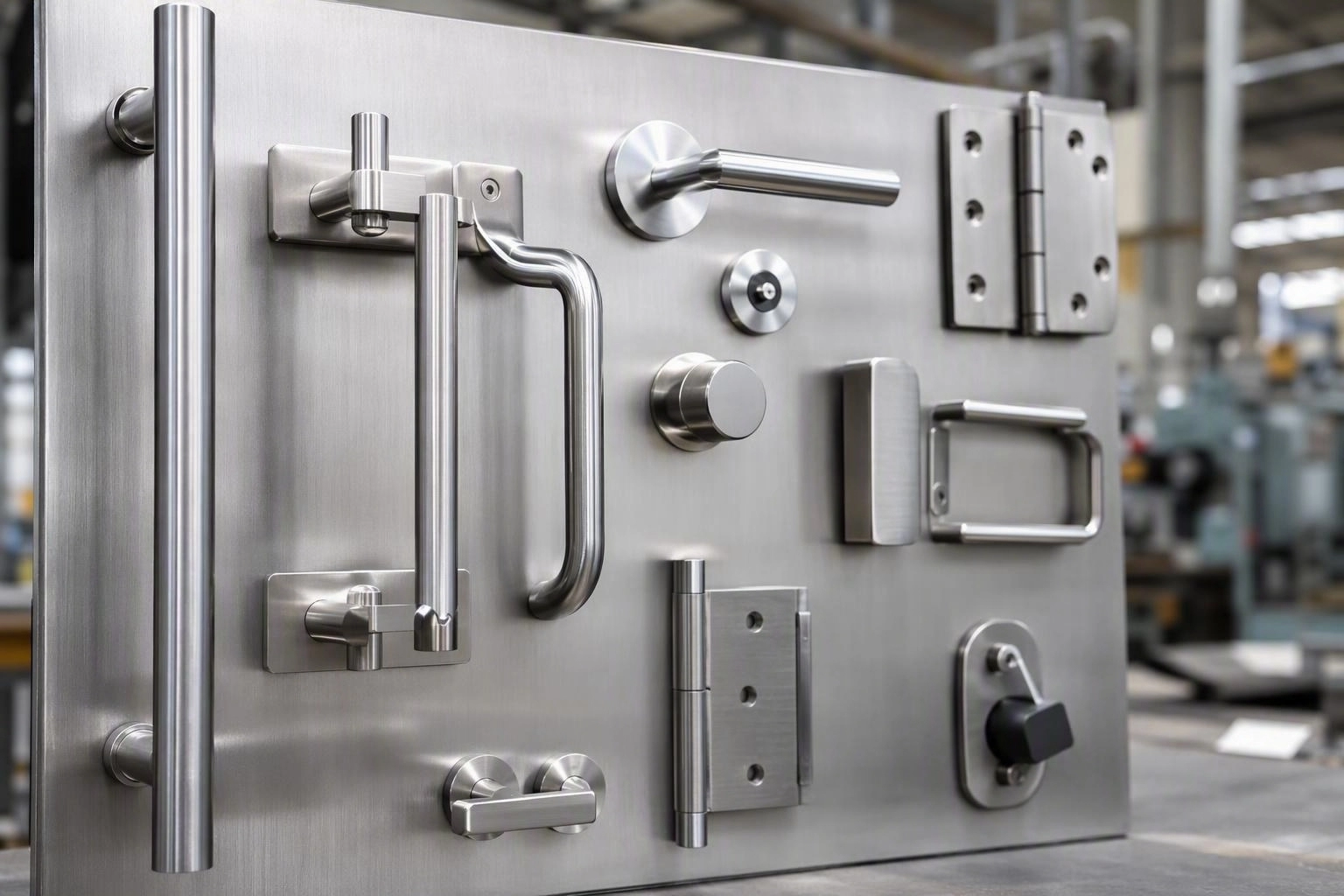
Galvanised steel brings a specific constraint: the zinc coating is itself the corrosion protection, and any treatment that attacks zinc is counterproductive. The treatment's job is to passivate the zinc surface, prevent white rust in storage and transit, and prepare the surface for paint where painting is specified.
Three issues recur:
- White rust (zinc oxide and hydroxide). Forms on freshly galvanised surfaces when they are stored in humid, poorly ventilated conditions — stacked sheets and bundled profiles are especially vulnerable because moisture is trapped between surfaces. A passivation treatment applied promptly after galvanising substantially reduces the risk.
- Paint adhesion on zinc. Paint does not bond ideally to bare galvanised steel. A conversion coating or adhesion-promoting pretreatment creates the necessary key, and it also prevents the reaction between zinc and the paint binder that causes blistering on some coating systems.
- Alkaline cleaner attack. Strong alkaline cleaners etch zinc and consume themselves rapidly in the process. Galvanised parts require either an inhibited alkaline product, a neutral cleaner, or careful control of the alkaline stage.
For the passivation and adhesion step on zinc-bearing surfaces, a silane-based conversion chemistry such as LG907 Silane Sealant offers a route to adhesion promotion without heavy metals, and it can operate in the same bath as steel and aluminium — a practical advantage on lines processing mixed architectural components.
Stainless steel in architecture: passivation is not optional
Architectural stainless steel is exposed, visible, and expected to remain that way. Two specific risks dominate:
Tea staining. Brown surface discolouration appears on stainless steel exposed to the atmosphere, particularly in coastal or polluted environments. It is not structural corrosion, but on a visible façade it is a serious appearance defect. The root cause is usually free iron contamination embedded during fabrication, or a passive layer that never formed properly — both of which passivation addresses directly. Proper fabrication practice (segregated stainless-only tools) and post-fabrication passivation are the two controls that matter.
Weld discolouration. Welded railings, canopies, and cladding show heat tint along welds. On an unpainted visible surface this is a clear quality defect, and beyond appearance it marks a chromium-depleted zone that is genuinely less corrosion resistant. Descaling followed by passivation is the established remedy; LG303 Stainless Steel Two-in-One Passivation Agent is commonly used for the final stage after the heat tint has been mechanically or chemically removed.
Where a large architectural contract requires a documented chrome-free process — increasingly common on public and environmentally certified projects — LG908 Chrome-Free Passivation Agent provides a conversion-type passivation route without hexavalent chromium.
Aluminium hardware: the appearance-driven case
Door handles, hinges, and window fittings are small, handled constantly, and inspected closely. Their finish requirements differ from those of large profiles in three ways:
- Fingerprint and handling resistance. A sealant or ceramic film that reduces surface energy makes the part easier to keep clean and less prone to visible handling marks.
- Consistency across large batches. A customer who buys 10,000 handles expects them to match. This requires the surface preparation stage to be genuinely repeatable, which in practice means controlled concentration, temperature, and time rather than operator judgement.
- Wear resistance. Handle surfaces are abraded in service, so the film must resist mechanical wear, not just corrosion.
For these applications, a ceramicizing or silane treatment is usually a better fit than a simple passivation. LG909 Ceramicizing Agent produces a hard, low-energy film suited to surfaces that are handled, and LG907 Silane Sealant delivers a dense organosilane film appropriate for adhesion promotion where the hardware will receive a decorative coating.
Process considerations specific to building materials
| Consideration | Why it matters here | Practical measure |
|---|---|---|
| Part size | Profiles up to 7 m; uniformity across the length is difficult | Agitation, correct stacking orientation, temperature uniformity along the tank |
| Batch consistency | Colour and finish must match across deliveries months apart | Documented parameters; retain reference samples per batch |
| Rinse water | Visible parts show water spots badly | Deionised final rinse; blow-off before drying |
| Storage between stages | Large parts wait; flash rust and white rust risk | Prompt drying; ventilated storage; short-term protection where needed |
| Cost pressure | High volumes, competitive market | Avoid unnecessary stages; optimise drag-out to reduce consumption |
A practical starting sequence
- Identify the substrate group precisely. Extruded aluminium, galvanised steel, stainless, and cast aluminium each require different chemistry, and a mixed architectural workload may require two or three separate lines or products.
- Define the required finish appearance before specifying the process. Bright, satin, and matt finishes require different amounts of material removal.
- Confirm the cleaning chemistry is compatible with the substrate. Inhibited or acidic on aluminium and zinc; standard alkaline on steel.
- Plan the rinse and drying stages for visible quality. Deionised final rinse and air blow-off, not just a longer dry.
- Address fabrication contamination at source. Stainless-only tools and racking for stainless work; separate racking for galvanised and carbon steel.
- Document parameters per product family so a repeat order six months later produces a matching finish.
How we can help
Foshan Changcheng Surface Technology supplies treatment chemistry for aluminium, galvanised steel, stainless steel, and mixed architectural workloads, including LG808 Aluminum Spray Acidic Degreasing Agent, LG809 illuminant, LG907 Silane Sealant, LG908 Chrome-Free Passivation Agent, and LG303 Stainless Steel Two-in-One Passivation Agent.
Send us your substrate range, required finish, part dimensions, and current process sequence. We will recommend a sequence and product set and provide samples for trial on production parts. Technical datasheets, ISO / MSDS / RoHS documentation, and electronic catalogues are available on request.


